
Payya
A new-generation subscription tracker - built to make recurring spend visible again.

Subscriptions pile up quietly.
The average person is signed up for more services than they can name — streaming, cloud storage, that app they trialled once and forgot to cancel. The charges are scattered across bank statements, the renewal dates are invisible until the money is already gone, and the only tools that promise to help usually want to read your entire bank account to do it. Most people just accept the slow leak.
Every charge, mapped to a day.
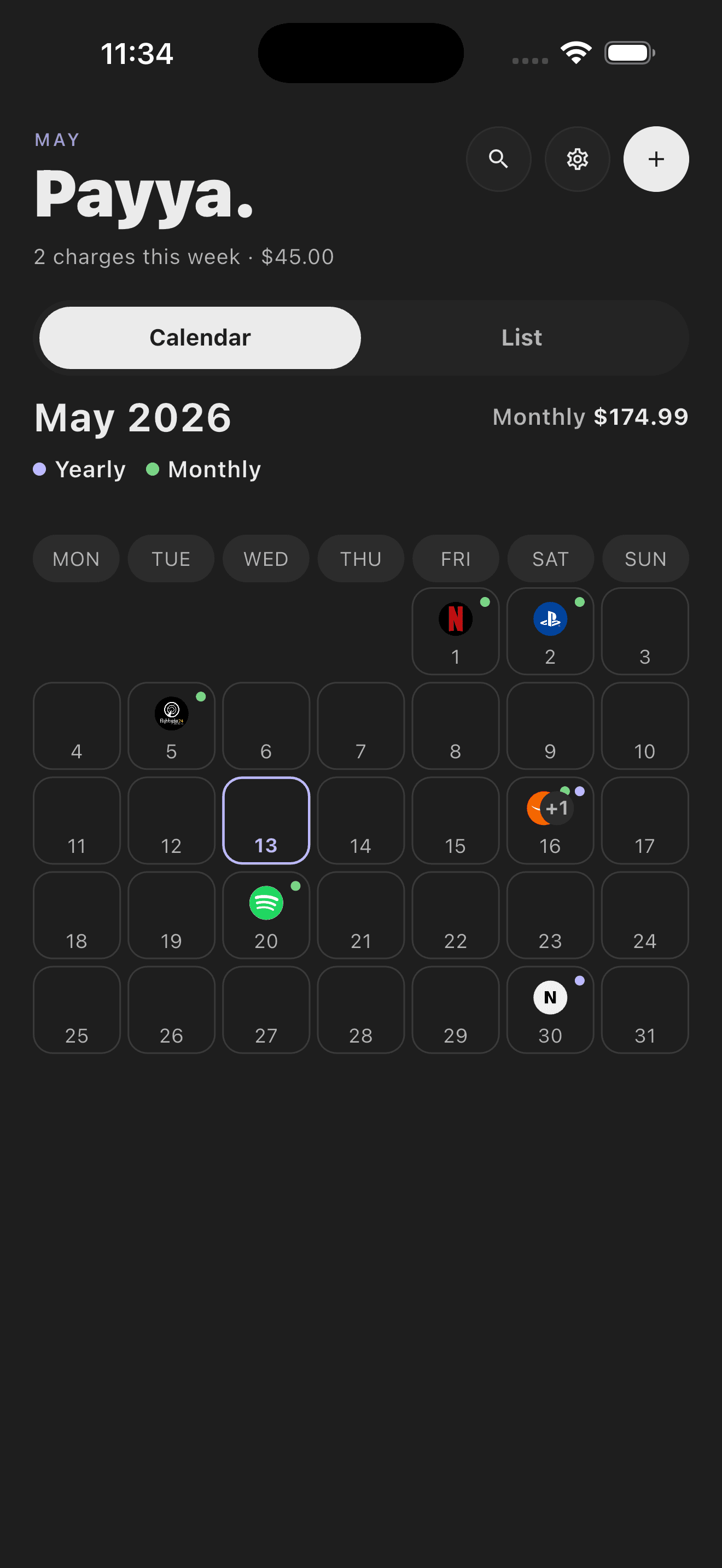
Payya turns a pile of forgotten payments into a single, glanceable view. A calendar plots every upcoming charge on the day it lands — an indigo dot for yearly renewals, green for monthly — so there's no hunting through statements and no trial that ends by surprise. Subscriptions can be added by hand in seconds, or found automatically: connect Gmail read-only and an AI extraction step scans a year of receipts and renewal emails, pulling out the name, price, currency, and billing cycle with a confidence score before anything is saved. Totals are tracked across 157 currencies, billing cycles can be monthly, yearly, or any custom interval, and on-device reminders quietly warn you a set number of days before each charge.
Privacy is the whole pitch.
Payya never connects to a bank or reads a card statement — a deliberate stance rather than a missing feature. It's local-first: start in guest mode and your data stays on the device, with secure cloud sync via Supabase as an opt-in only when you want it. The optional Gmail scan requests read-only access and searches only for receipts and billing mail, nothing else. The interface is localized (English, French, and Polish), reminders run in the background on-device instead of pinging a server, and the marketing and legal surface is translated across seven languages.
Shipping on iOS, Android in beta.
Payya is live on iOS at version 1.0.3, built in Flutter on top of Supabase for auth, data, and storage, with the email-scanning extraction running as a serverless edge function. Sign-in works through Apple, Google, or email OTP — or not at all, thanks to guest mode. An iOS home-screen widget surfaces what's due without opening the app, and an Android beta is opening to early testers now, with Sentry and in-app feedback wired in to catch issues before wider launch.